Table of Contents
I. Introduction
An audit is an independent examination of an entity’s financial statements, carried out so that the auditor can express an opinion on whether those statements are prepared, in all material respects, in accordance with the applicable financial reporting framework and give a true and fair view. The opinion may fit into a few lines, but behind that opinion lies a much larger body of work. It involves a whole range of procedures such as evidence examined, risks assessed, questions raised, judgements made and conclusions reached.
Ultimately, it is clear and precise documentation which can bring the whole work together and establish the clear trail of how the auditor concluded.
II. What is Audit Documentation, and What Does it Comprise?
In simple terms, audit documentation is the record of audit procedures performed, relevant evidence obtained and the conclusions reached. It may be maintained in both physical and electronic format.
Audit documentation is not merely an administrative or compliance exercise. As per SA (Standard on Auditing) 230, Audit Documentation, it is an integral part of the audit process and supports audit quality. Well-prepared documentation enables even an auditor with no previous connection to the engagement to understand the nature of the audit performed, the significance of the matters considered, and the judgements and conclusions reached during the audit. Good documentation, therefore, serves two purposes: It demonstrates that the audit was properly executed and helps facilitate its effective review.
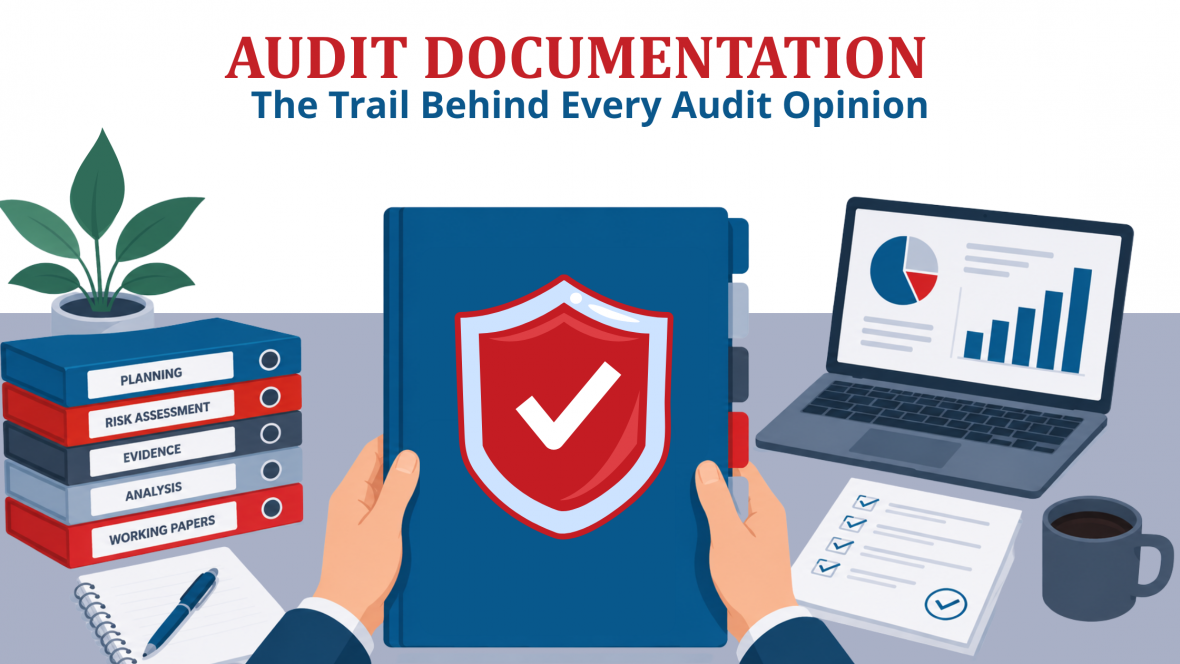
The content of the audit file will vary depending on the nature, size and complexity of the engagement, but typically includes the audit plan and programmes, risk assessments and analyses, audit evidence, external confirmations, written representations, checklists, correspondence on significant matters, summaries of significant matters, and the working papers recording judgements and conclusions.
III. Requirements Under SA 230 and the Challenges Auditors Face
Effective audit documentation is one that tells the entire story of an audit. It should show not only what was tested, but also why a particular procedure was performed, what evidence was obtained, what exceptions were identified and how those matters were resolved.
SA 230 sets certain clear expectations for audit documentation. However, meeting these requirements involves quite a few challenges. Let us have a quick look at some such common requirements and the corresponding challenges that auditors frequently face:
A. Sufficient and Appropriate Documentation
The audit file must record the procedures performed, the evidence obtained and the judgements made in sufficient detail that the audit stands fully explained on its own. It should be complete and coherent enough to be understood from the file alone, without relying on the recollection of those who carried out the work.
The challenge: Striking the balance. Under-documentation leaves gaps in the audit trail; over-documentation buries the matters that actually mattered beneath detail that adds no value.
B. Timely Preparation
Working papers should be prepared on a timely basis as the audit progresses. This is primarily to preserve the accuracy of the auditor’s understanding and decisions. Delayed documentation can make it difficult to reconstruct the basis of the auditor’s judgements and increase the risk of omissions.
The challenge: Deadline pressures tend to pull the other way, and writing up in real time is easily postponed until the work is done.
C. Clear Basis for Significant Conclusions
The record should clearly document the rationale behind all significant judgements and conclusions. Simply recording the conclusion without explaining the underlying reasoning will not provide sufficient documentary support to the audit process.
The challenge: The reasoning behind a significant judgement is the hardest thing to pin down and the easiest to miss. It lives in the auditor’s head, feels obvious at the time of audit, and rarely makes it onto the file, so the conclusion is left standing without the very analysis that justifies it.
D. Proper Assembly, Safeguarding and Retention
Audit documentation must be appropriately assembled, securely maintained and retained in accordance with SA 230, for at least seven years from the date of the auditor’s report. With electronic working papers, auditors must also address access controls, confidentiality, version management and data security.
The challenge: The file is meant to be locked after sign-off, but papers keep getting changed, and without version control there’s no way to prove what was there when the opinion was given.
Beyond these, auditors contend with pressures that cut across the whole file:
- a regulatory landscape that changes frequently,
- the growing volume of digital evidence that must be captured and preserved,
- resource constraints (particularly acute for smaller firms and sole practitioners), and
- the difficulty of maintaining consistent documentation across the engagement team.
IV. Practical Approach for Effective Audit Documentation
A. Prioritising Key Audit Matters
Instead of accumulating undifferentiated detail, documentation effort can be directed towards where it counts, such as material risks, significant judgements, key evidence and exceptions. This way, the documentation can stay relevant and reviewable.
B. Using Standardised Formats for Documentation
Adopting formats such as ICAI’s audit working paper templates can bring consistency across engagements and team members. They can also help in reducing the risk of missing out on requirements of the Standards.
C. Stay connected, stay updated
Stay updated with the Implementation Guide to SA 230, the working paper templates and other applicable guidance, and use ICAI’s training programmes to keep technical understanding sharp and relevant.
D. Harnessing Technology
Audit software and cloud-based platforms can strengthen the efficiency, security, and consistency of documentation, but only when the tool genuinely suits the firm’s engagements and is used uniformly by the whole team.
Evaluate tools against the standards and the firm’s methodology before adopting them, then apply them consistently so that the file holds together regardless of who prepared it.
V. From Working Papers to Intelligent Audit Evidence
Technology is already reshaping how audit documentation is prepared. Cloud-based platforms, automation, data analytics, and artificial intelligence (AI) are helping auditors analyse evidence and flag inconsistencies. The raw material of the file is also growing more digital, including system-generated reports, electronic confirmations and audit trails.
AI, in particular, can identify anomalies far better and take over repetitive work, freeing auditors to focus on professional judgement. But technology can complement professional judgement but can never replace it. AI-generated output is an input to be evaluated and validated, not a conclusion in itself.
VI. Conclusion
Audit documentation is the professional testimony of an auditor. A strong audit file does more than just demonstrate compliance; it makes the audit much more reviewable, defensible and consistent. As audit evidence becomes increasingly digital and AI begins to influence audit processes, the emphasis should remain on clarity, relevance and professional scepticism. Technology can make documentation faster and more intelligent, but it is the auditor’s judgement that gives it the professional value, and as always, it is auditors who remain responsible for their findings and conclusions.
Contributors
CA N Srilatha Bhat – LinkedIn
Kuldeep Sarma – LinkedIn
Poonam Vernekar – LinkedIn

 blog_upadhya